
 International Scientific Advisory Council
The activities of the Golden Helix Foundation are supervised by an international scientific advisory council, consisting of world leaders in the field of translational medicine. Currently, the international Scientific Advisory Council consists of the following members:
George P. PATRINOS – Scientific Director and Chairman
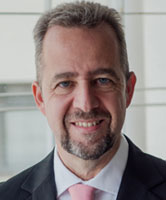
George P. Patrinos is elected General Director and Director of Research of the Hellenic Pasteur Institute in Athens, Greece and serves as Professor of Pharmacogenomics and Pharmaceutical Biotechnology in the University of Patras, School of Health Sciences, Department of Pharmacy in Patras, Greece. He also holds adjunct Full Professorships at Erasmus MC, Faculty of Medicine, Department of Pathology (Clinical Bioinformatics Unit) in Rotterdam (the Netherlands) and the United Arab Emirates University, College of Medicine and Health Sciences, Department of Genetics and Genomics and since May 2023 he serves as the Chairman of the Scientific Advisory Board of the ASPIRE Abu Dhabi Precision Medicine Research Institute in Al-Ain, Abu Dhabi (UAE). He served for almost 7 years as Chair of the Global Genomic Medicine Collaborative (G2MC) and for 12.5 years as Full Member and Greece’s National representative in the Committee for Human Medicinal Products, Pharmacogenomics Working Party of the European Medicines Agency (EMA).
George is the founder of the Laboratory of Pharmacogenomics and Individualized Therapy, the first officially established academic pharmacogenomics laboratory in Greece. His group has keen interest in research covering disciplines from wet and dry lab and public health genomics projects, all focusing on pharmacogenomics and personalized medicine. In particular, his research interests involve discovery work and clinical implementation of pharmacogenomics, with participation in several prospective pharmacogenomics clinical studies focusing in particular on psychiatry but also cardiology and oncology, genomics of rare disorders and transcriptional regulation of human fetal globin genes. Moreover, George’s group is internationally renowned for its involvement in developing National/Ethnic Genetic databases to document the genetic heterogeneity in different populations worldwide and of genome informatics tools to translate genomic information into a clinically meaningful format. Also, George’s group has a keen interest in public health genomics to critically assess the impact of genomics to society and public health.
George has more than 340 publications in peer-reviewed scientific journals, some of them in leading scientific journals, such as The Lancet, Lancet EBioMedicine, Nature, Nature Genetics, Nature Rev Genet, Nucleic Acids Res, Genes Dev, iScience. Also, he has co-authored and co-edited more than 15 textbooks, among which the renowned textbook “Molecular Diagnostics”, published by Academic Press, now in its 3rd edition. He is the Editor of “Translational and Applied Genomics” book series, published by Elsevier and the Editor-In-Chief of the prestigious Pharmacogenomics Journal (TPJ), published by Nature Publishing Group, while he is Associate Editor and member of the editorial board of several high impact scientific journals and a member of several international boards and advisory and evaluation committees.
Apart from that, George is the main co-organizer of the Golden Helix Conferences, an international meeting series on Pharmacogenomics and Personalized Medicine with more than 55 conferences organized in more than 40 cities and 20 countries worldwide.
Paolo FORTINA
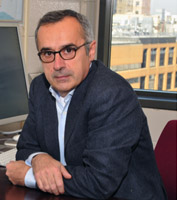
Paolo Fortina received his MD and PhD in Pediatrics from the University of Turin School of Medicine in Italy. In 1991, he joined the Department of Pediatrics at the Children’s Hospital of Philadelphia and the University of Pennsylvania School of Medicine.
His research focuses on genomics, aiming to develop novel diagnostic and therapeutic approaches. His work has included studies on gene expression in normal and diseased states, as well as the detection of nucleic acid alterations. In 1997, he contributed to the development and validation of the OLA-PCR cystic fibrosis diagnostic panel, commercialized by Applied Biosystems, and played a key role in identifying the connexin 26 gene, associated with autosomal recessive neurosensory deafness.
In the field of microarray-based technologies, he has contributed to various advancements, including the development of a thermal gradient chip with Hitachi and a four-color scanner. His other efforts include array-based sequencing-by-hybridization with Callida Genomics and the simultaneous typing of SNPs in chromosomal regions undergoing loss of heterozygosity (LOH) using customized Affymetrix tag arrays.
Currently, he is an Emeritus Professor of Cancer Biology and Medical Oncology at Thomas Jefferson University in Philadelphia. He led the NIH-NCI-funded Cancer Genomics Laboratory at the Sidney Kimmel Cancer Center, where he worked on mRNA expression profiling for the retinoblastoma pathway, X-linked mental retardation, and transcriptome analysis of platelets in patients with heparin-induced thrombocytopenia. His subsequent research included studies on long and short non-coding RNAs and whole-exome sequencing using next-generation sequencing technology.
Dr. Fortina has authored more than 200 peer-reviewed publications and has served on national (NIH and NSF) and international grant review panels. He is a member of the editorial boards of the American Journal of Hematology, European Journal of Human Genetics, Journal of Cancer Therapeutics and Research, and Journal of Genomics and Proteomics. Previously, he was an editor for Clinical Chemistry and Human Mutation.
Federico INNOCENTI
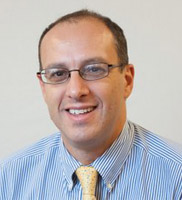
Federico Innocenti, MD, PhD, is an Associate Professor in the Division of Pharmacotherapy and Experimental Therapeutics of the UNC Eshelman School of Pharmacy at the University of North Carolina (UNC) at Chapel Hill. He is the first Associate Director for Oncology Research in the Institute for Pharmacogenomics and Individualized Therapy. He holds appointments in the UNC School of Medicine and the UNC Lineberger Comprehensive Cancer Center. Dr. Innocenti obtained his MD from the University of Pisa, Pisa, Italy, followed by residencies in Clinical Pharmacology and Oncology. He has a PhD in Pharmacology, Toxicology, and Chemotherapy. He joined UNC in January 2011 after twelve years of research in cancer pharmacogenetics at the University of Chicago. At the same institution, he directed the Pharmacology Course for the Pritzker School of Medicine for the seven years.
Dr. Innocenti is the principal investigator of numerous pharmacogenetic studies within the Alliance of Clinical Trials in Oncology (previously Cancer and Leukemia Group B), where he serves as the Chair of the Gastrointestinal Solid Tumor Correlative Science Group. He is the Chair of the Oncology Section at the American Society of Clinical Pharmacology and Therapeutics. He has published more than eighty peer-reviewed publications and book chapters in clinical pharmacology and pharmacogenomics, and he is the editor of three books in the field of pharmacogenomics. Dr. Innocenti sits on the editorial board of Journal of Clinical Oncology, Pharmacogenetics and Genomics, Therapeutic Drug Monitoring, Current Drug Metabolism, and others. He is the Associate Editor for Pharmacogenomics. He has organized three Golden Helix Symposia on genomic and translational medicine in 2009, 2010, and 2012. One of Dr. Innocentis exemplary achievements is the elucidation of the genetic basis of severe neutropenia in cancer patients treated with irinotecan, a poster child for pharmacogenetic. According to these results, the label of irinotecan was revised in 2005. Dr. Innocenti is a co-inventor of the FDA-approved UGT1A1 genetic test for patients treated with irinotecan. Dr. Innocentis NIH-funded research program is currently focused on the discovery of genomic determinants of efficacy and toxicity of cancer chemotherapy, integrating clinical genomic investigation with functional evaluation of gene variation.
Milan MACEK
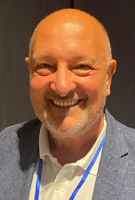
Professor Milan Macek Jr. MD, DSc is the chairman of the largest academic medical/molecular genetics institution in the Czech Republic – Department of Biology and Medical Genetics of Charles University Prague-2nd School of Medicine and Motol University Hospital and of the National Coordination Centre for Rare Diseases (www.nkcvo.cz; NKCVO) responsible for the implementation of the ten-year national strategy on rare diseases and resulting three national action plans. In addition, he is chairing the National Rare Disease Taskforce at the Ministry of Health. In this capacity, his institute has been serving as a “clearing center” for the dissemination of knowledge gathered within various international projects on rare disease-related research and diagnostics (e.g., EuroGentest.org, RD-Connect.eu, Solve-RD.eu, Norway Grants) to partners in Eastern Europe, Transcaucasia, and the Middle East. In this capacity, Prof. Macek is also the Czech National coordinator of Orpha.net. As chairman of NKCVO, he assured that since 2017, Czechia has ranked first within EU13 in terms of participation in European Reference Networks (ERN) for rare diseases. Prof. Macek is also the past President of the European Society of Human Genetics (www.eshg,org; 2010-2011 ESHG) and currently serves as the ESHG liaison for European National Human Genetics Societies (https://www.eshg.org/76.0.html). Under his leadership, medical genetics was recognized as an official EU specialty in the Professional Qualifications Directive in 2011. He also closely collaborated with the Council of Europe on ratifying the Additional protocol on genetic testing for health purposes to the Oviedo convention (2019). He had also been a past board member of the European Cystic Fibrosis Society (ECFS.eu; 2007-2014) and is a current member of the European Cystic Fibrosis Registry board (https://www.ecfs.eu/ecfspr), where he published seminal papers on the disparities in cystic fibrosis care between the “New” and “old” EU Member States. Moreover, he had also been a board member of the European Society of Human Reproduction and Embryology (www.eshre.eu; ESHRE), where he was responsible for three joint position statements of ESHG and ESHRE in the field of reproductive genetics as their senior author. Prof. Macek served at the European Commission Expert Group on Rare Diseases (formerly www.eucerd.eu) and is currently involved in the European Board of Member States for European Reference Networks for Rare Diseases (https://ec.europa.eu/health/ern_en), including the newly formed EU Advisory Board on ERN sustainability. He was also a member of the Diagnostic Committee of the International Rare Disease Consortium (www.irdirc.org). Prof. Macek is currently the president of the Czech Society of Medical Genetics and Genomics (www.slg.cz). Finally, he was the chief government advisor of the CZ EU Council presidency, under which the EU Council recommendation on a field of action in rare diseases was adopted in 2009. He has also been involved in the second CZ EU Council presidency in 2022, under which he organized key meetings aimed at the development of an updated policy framework for rare diseases (for more information – https://www.mzcr.cz/towards-a-new-european-policy-framework-building-the-future-together-for-rare-diseases/). Prof. Macek did his postdoctoral studies at the Department of Medical and Human Genetics at Humboldt University Berlin (1989-1992), followed by McKusick-Nathans Centre for Genetic Medicine, Johns Hopkins University in Baltimore (1992-1996). In 1992, he was also a fellow at Harvard School of Medicine in the field of non-invasive prenatal diagnosis of rare diseases. His primary research and clinical interests are in the molecular genomics of rare diseases, including their deep phenotyping and how to bring genomics knowledge to the bedside via targeted therapies with orphan medicinal products. He has also been involved in health economics “cost of illness” studies in this regard or in establishing recommendations for next-generation sequencing. His citation index is over 24,000x, and he has an H –index of 60.
Juergen REICHARDT
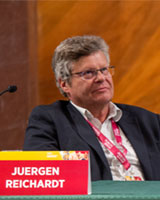
Prof. Juergen Reichardt, is a human molecular biologist, geneticist and biochemist with epidemiologic interests. In general terms, he aims to understand how the genome – in conjunction with the environment – produces the multitude of human phenotypes. To this end, he has chosen a “candidate gene” approach for selected phenotypes of interest. These choices were dictated by his training as a biochemist, molecular biologist and geneticist with a focus on metabolic pathways and common diseases.
Juergen has extensive molecular biology and molecular epidemiologic experience in the area of identification and characterization of disease-causing mutations in metabolic genes. Most relevant here are his efforts on galactosemia in the past and also on the SRD5A2 gene.
Juergen academic training involved working with an outstanding, Nobel-prize winning biochemist, Paul Berg, for his PhD at Stanford and a ground-breaking, world-class human geneticist, Savio Woo, during his postdoctoral training also in the USA. Throughout those early years, he was the first to clone the gene responsible for human galactosemia, a Mendelian disorder, as well as being the first to identify and characterize mutations that cause this disorder.
Juergen then joined the faculty of the University of Southern California Keck School of Medicine (USA) where he rose through the ranks from Assistant to Associate Professor. There he continued his investigations into galactose metabolism by cloning and characterizing the gene encoding UDP-galactose 4’ epimerase (GALE), the cause of human epimerase-deficiency galactosemia. In fact, he and his lab were responsible for cloning and characterizing two of the three genes involved in the human Leloir pathway of galactose metabolism and his lab identified galactosemia mutations in all three galactose metabolic genes.
Juergen then turned his interest to common diseases, especially prostate cancer. He has made significant contributions to the biochemical, genetic, epidemiologic and molecular analysis of androgen metabolism and prostate cancer over the past two decades.
Juergen arrived as the foundation Plunkett Chair of Molecular Biology (Medicine) at the University of Sydney in Australia in 2005 and was also the Head of the School of Pharmacy and Molecular Sciences at James Cook University. Furthermore, he served as the Associate Dean Research for the Faculty of Medicine, Health and Molecular Sciences at James Cook University
Juergen has worked on other cancers, incl. brain and ovarian. Furthermore, he has also recently published on policy, politics, administration and science. Juergen also served as the ViceChancellor, Research and Innovation at YachayTech University, the first research-intensive university in Ecuador, and as interim Dean.
Juergen has been recognized internationally: he has coauthored almost 200 peer—reviewed publications, incl. in such prestigious journals as The Lancet, Nature, PNAS, Science, TiBS, TiC and TiG. Furthermore, he has held continuous grant funding since 1992 from various agencies. Juergen has in fact been funded uninterrupted by the NIH from 1994-2010. He was also funded externally in Australia and Ecuador.
Juergen currently serves on a dozen editorial boards, incl. as Executive Associate Editor of Human Genomics. He also has extensive experience in reviewing manuscripts and grant applications, incl. for the ARC and the NHMRC in Australia, the Research Grants Council in Hong Kong, the MRC in the UK, the NMRC in Singapore and the DoD, NIH and VA along with many others in the USA.
Ron van SCHAIK

Ron H.N. van Schaik, PhD is a registered European Clinical Chemist, head of the Department of Clinical Chemistry at Erasmus MC Rotterdam, The Netherlands and Full Professor of Pharmacogenetics. He studied chemistry at Utrecht University (specializations Biochemistry, Clinical Chemistry and Molecular Biology) and received his PhD in 1992 where he was trained in molecular biology at Cold Spring Harbor Laboratories in New York. He has worked as post-doc at the Erasmus University (Dept. Endocrinology & Reproduction) and the Academic Hospital Rotterdam (Dept. Pathology, Dept. Clinical Chemistry) on translational research involving molecular biological testing.
He completed his residency in clinical chemistry in 2003 and has been working since then at the Dept. Clinical Chemistry at Erasmus MC in Rotterdam, The Netherlands. In 2021, he was appointed head of that department. Professor van Schaik leads the International IFCC Expert-Laboratory on Pharmacogenetics: his research is focused on clinical implementation of pharmacogenetics. Current lines of research include Oncology, Cardiology, Transplantation/immunosuppression, Psychiatry and Pain-medication. He has published over 350 articles on pharmacogenetics, and participates in national and international advisory committees on this topic (ESPT, NVKC, DPWG, CPIC, AMP, PGRN, PharmVar). In 2001, Professor van Schaik received the Ortho Clinical Diagnostics Award of the Dutch Society for Clinical Chemistry for outstanding research.
Marc S. Williams
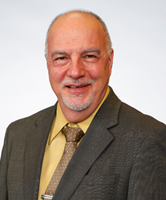
Marc S. Williams, MD, FAAP, FACMG, FACMI is a clinical geneticist. He is professor and director emeritus of Geisinger’s Department of Genomic Health. He served as the co-PI of the Geisinger eMERGE project and was the medical director of Geisinger’s undiagnosed disease genome sequencing clinical research project. His current research is focused on the implementation of genomic and precision medicine. He serves on the NHGRI Genomic Medicine working group. He has participated in the Personalized Medicine Workgroup of the Department of Health and Human Services’ American Health Information Community Task Force and was a member of the Secretary’s Advisory Committee for Genetics, Health and Society.
He was a member of the EGAPP working group. He is a member of the American College of Medical Genetics and Genomics (ACMG) Board of Directors, serving as Vice-President for Clinical Genetics, then rejoined the board in 2019 serving for six years, including President from 2021-2023. He is past chair of the ACMG Committee on the Economics of Genetic Services and founded the ACMG Quality Improvement Special Interest Group. He is a member of the Scientific Advisory Boards of the Clinical Pharmacogenetic Implementation Consortium, the NIH Undiagnosed Diseases Project, and Online Mendelian Inheritance in Man. He has authored over 250 articles on a variety of topics including the economic evaluation and value of genetic services, implementation of genomic medicine, and the use of informatics to facilitate genomic medicine and precision health.
Branka Zukić

Dr. Branka Zukić is a Full Research Professor at the Institute of Molecular Genetics and Genetic Engineering, University of Belgrade, and the Head of the Group for Molecular Biomedicine. Her research focuses on the molecular basis of health and disease and translational biomedicine, with a strong emphasis on the implementation of personalized medicine based on patients’ individual genomes into clinical practice. More specifically, her work investigates the influence of pharmacogenetic variants on the efficacy and toxicity of chemotherapy in pediatric acute lymphoblastic leukemia, inflammatory bowel disease, systemic sclerosis, and COVID-19. She also conducts comprehensive genomic profiling in patients with non-small cell lung cancer and hepatocellular carcinoma and works on identifying molecular markers for disease stratification, prognosis, and treatment optimization in hematological malignancies. Her research integrates bioinformatics and machine learning tools for therapy monitoring and the design of predictive genetic testing panels.
Dr. Zukić is currently the PI of PharmGenHUB, a HE-funded project dedicated to advancing population pharmacogenomics in the Western Balkan region. Also, she is a coordinator of Serbian excellence hub team of HE-funded InnoThyroGen project, focused on innovating thyroid health with genomics and predictive algorithms. She has more than 55 publications and h-index 22. In addition to her research activities, she has been actively involved in molecular diagnostics of rare diseases in Serbia, applying high-throughput sequencing technologies.
Sonja Pavlovic

Dr Sonja Pavlovic received her PhD degree in Molecular Genetics from the University of Belgrade. She is a Full Research Professor at the Institute of Molecular Genetics and Genetic Engineering University of Belgrade (IMGGE). She is a member of the Academy of Medical Sciences in Serbia.
Dr Sonja Pavlovic was a founder and the head of the Laboratory for Molecular Hematology and the Laboratory for Molecular Biomedicine in IMGGE. She was a coordinator of numerous projects funded by EU, pharmaceutical companies and the Ministry of Science Republic of Serbia. She has introduced numerous molecular genetic diagnostic tests in medical practice in Serbia, and she heads the Center for Genetic Diagnostics of Rare Diseases
Research interests of dr Sonja Pavlovic are precision medicine, molecular genetics of rare diseases, hematological malignancies and pharmacogenomics. She has authored more than 200 articles in distinguished international journals. She is also an author of several chapters in books for medical students and professionals, as well as an author of two books dedicated to molecular genetics in medicine. She is a member of the Editorial board of several journals and an Editor in Chief of annual scientific article collection “Trends in Molecular Biology”.
Teaching activities of dr Sonja Pavlovic include seminars and courses at the Faculty of Biology, Faculty of Medicine and Faculty of Pharmacy, University of Belgrade. She has been the supervisor of more than 50 master and doctoral theses.